
Smoked Beef Brisket
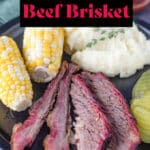
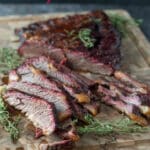
This Smoked Beef Brisket is the kind of low-and-slow recipe that’s worth every minute. Rich, smoky, and incredibly tender, the meat turns melt-in-your-mouth soft with a deep, beefy flavor. It’s simple to prep, then the smoker does the work while you end up with juicy, flavorful slices every time.

🍽️ Recipe Name: Smoked Beef Brisket
⏰ Ready In: 11 hours 30 minutes
⏳ Prep Time: 30 minutes
🔥 Cook Time: 10 hours
👥 Serves: 16
🥕Main Ingredients: Beef brisket, kosher salt, black pepper, garlic
🍳 Special Equipment: Smoker (pellet, charcoal, or electric), probe thermometer, parchment paper, sharp chef’s knife
⭐ Why You’ll Love It: Low-effort, big payoff. This brisket comes out juicy, tender, and packed with rich, smoky flavor every time.
👇 Full measurements and instructions are in the recipe card below.
Table of contents
While researching this article, I have read many other articles that seem to overcomplicate the process.
Smoking has been a means of preserving food for thousands of years. Now it is mostly used to add flavor and texture. Not to make the food shelf stable.
It is a very forgiving technique that really has very little hands-on time. The smoker does most of the work for you. Having said that, it does take some preparation and planning. But most of all, it takes patience.
You can’t rush the process. Smoking is generally used on cuts of meat that are tougher and contain more connective tissue. In other words, these are the muscles of the animal that work harder.
So, when you cook these tougher cuts, it’s a good idea to cook them low and slow. That is whether you are braising, slow cooking, or smoking.
 | This recipe is part of my Smoked Cookbook, packed with more of my go-to smoked favorites. Get the ebook here |
What is the brisket?
The brisket of an animal is found on the chest, above the front legs. It is a thinner cut of meat and, as stated above, has more connective tissue because this muscle works harder than other muscles in the animal.
The brisket is actually two muscles. The larger one is referred to as the flat, and the fatter one on the top (the front of the animal) is referred to as the point.
They are separated by a layer of fat.

Which beef to buy?
Typically, if you can find brisket at the grocery store, they separate the flat and the point. Usually, they sell the flat.
We usually buy our brisket from our local butcher or the restaurant store and buy a whole packer brisket. This includes both muscles, the flat and the point.
Buy the best quality you can afford. USDA Prime, Choice or Select. You can use American Wagyu beef brisket, but it is incredibly expensive.
Trimming the brisket
Depending on where you purchase your beef brisket, you may need to do quite a bit of trimming. We purchase ours at our local butcher, so they do a fairly good job of trimming.
If the layer of fat on the outside, called the fat cap, is very thick, trim it about ¼ inch thick. Remove any silver skin or any small pockets of fat on the outside.
Trim the layer of fat that separates the flat from the point to where you can see. Leave the rest of the fat to baste the meat. You don’t want to remove too much meat, so take your time with this.

How to season the beef brisket
Although many cuts, like pork, can require intricate rubs, marinades, or brines. Briskets are so flavorful that minimal is better. Many master smokers, especially Texans, use just kosher salt and coarse-ground black pepper. We also add granulated garlic to the salt and pepper, basically because we use garlic on everything.

You don’t need to brine or inject the meat to make it flavorful and tender. There is enough fat on the beef. That is all you need.
Generously season the meat with salt the day before smoking. Place it on a large rimmed baking sheet to minimize spills. Refrigerate it uncovered for 12-24 hours. This will help tenderize the meat even more.

Before smoking, remove the roast from the refrigerator and let it warm up while you heat the smoker to 225° -250°F. You really don’t want it any hotter than that. Low and slow is the name of the game.
Generously, sprinkle the roast with the rub that you prepared with the garlic, salt, and pepper.

What wood to use
Depending on what type of smoker you have, we like to use cherry, apple wood, or pellets. If you don’t have access to those, you can use hickory, mesquite, or oak, but we prefer the sweeter flavor of the fruit.
How to smoke it
Once the smoker has heated, place the brisket on one of the racks. Either side can go up or down. We generally put the fat side up, but it really doesn’t matter. Insert the probe thermometer into the thickest part of the meat, if your smoker comes with one.
If using a charcoal smoker, wait until you have white (referred to as blue) smoke.
We sometimes use a spritz. This is purely optional with beef, but we think it adds to the flavor. The spritz is made from 1 part apple cider vinegar or apple juice and two parts oil. Use a clean, food-safe spray bottle to spritz the beef.
Spritz it every hour or two.
The Stall
Somewhere between 160°F and 175°F, your brisket will enter what is known as the stall. This period can last a couple of hours, during which the internal temperature of the meat doesn’t climb as you would expect.
This is because, as the fat inside the brisket melts, it releases moisture that cools the meat’s surface. It’s similar to how sweating works, where the evaporation slows things down and keeps the temperature from rising quickly.
The Wrap
The stall is the time to wrap the meat. This is referred to as a Texas crutch. This will shorten the stall period. By this time, the meat should have developed a nice bark. Typically, you wrap the meat in pink butcher paper or tin foil. We have found that parchment paper works just as well as butcher paper, and then you don’t lose the smoke flavor like you would with foil. Also, we don’t have to store an extra huge roll of paper.

If you don’t have either butcher paper or parchment, you can use aluminum foil, but you risk obtaining a flavor and texture more similar to pot roast.
Once the brisket reaches about 180°F, the temperature will rise more rapidly. Monitor the temperature at this point closely with the smokers’ thermometer.
When it hits 195°F, then monitor the temp every 15 minutes to half hour or so with an instant read thermometer. Make sure you temp the meat itself, not the fat.
Note the texture of the meat with the probe. When it is done, the probe will be removed with little to no resistance. Like it would into brownies or cake. (maybe a slight exaggeration). The internal temperature of the brisket is usually between 195° and 205°F.
It would be nice if we could give you an exact cook time, but there are too many factors involved, including the size of the roast, the variation in smoker temperatures, how many times you open the door or raise the lid, and the individual cut of meat itself.
The rest
Yes, this is a step. And probably the most important step. If you don’t let the meat rest for at least 30 minutes (up to 2 hours), you will lose all of those lovely juices that you worked so hard to maintain.
Let it rest.
Pro tip: Don’t let your guests know that the meat is done, or you may need a bat to keep them from cutting it early. 🙂

If your meat is done early, you can keep it unsliced, wrapped, and place it in a cooler without ice or your oven for at least 3-4 hours, and it will still be warm enough to serve. So don’t worry about that.
Slicing the meat
If you bought a full packer brisket (see above section, which brisket to buy) then you will want to separate the point from the flat before slicing.
The reason for this is that the grain of the point is opposite the grain of the flat. You always want to slice your meat against the grain for the best texture.
Using heat-resistant gloves, separate the point from the flat. Place the roast flat side down. You will see the transition where it becomes fatter and includes the point. Just slowly cut the fat layer between.
Once you have them separated, place them with the inside (where you just cut) up. You will clearly see the direction the grain of the meat is running.
Use a sharp knife to cut the brisket against the grain into about ¼” thick slices.
Serve with your favorite BBQ sauce.
Pro Tips for Your Success
- Don’t skip the rest. Once the brisket is done, let it rest at least 30 minutes (up to 2 hours) so the juices redistribute and stay inside the meat instead of spilling out when sliced.
- Keep your smoker steady at 225-250°F (107-121°C). Consistent low heat is what turns a tough cut into tender, juicy brisket.
- Be ready for the stall around 160-175°F. The temperature may stop rising for a while, but this is normal. Just stay patient and continue cooking or wrap when the bark is set.
- Wrap it at the right moment. Once the bark is firm and dark, use parchment or butcher paper to help push through the stall while holding in moisture and smoke flavor.
- Trust texture over time. Brisket is ready when the probe slides in with little resistance, not just when it hits a certain temperature.
Sides to serve
How to reheat smoked brisket
If frozen, thaw in the refrigerator at least overnight.
- Place slices or a whole chunk in a deep baking pan. Pour beef broth into the bottom of the pan.
- Cover tightly with aluminum foil.
- Bake at 325°F for about 20 minutes for slices. About 1 hour for larger chunks.
You can also place the meat in your slow cooker with a bit of beef stock and cook on low for a couple of hours. You will end up with a pulled meat consistency.
If you end up with leftovers, these brisket tacos are an easy way to turn them into something completely new and just as satisfying.
How long will leftovers last?
Leftovers will last 3-5 days in the refrigerator.
For longer storage, vacuum pack slices or chunks and freeze up to 6 months.
What to do with leftovers?
Leftover brisket is delicious in so many ways.
- Warm some sliced brisket and make sandwiches or subs with cheese, grilled onions, and BBQ sauce.
- Make brisket tacos. Delicious.
- Use it for quesadillas.
- Make appetizer crostini with toasted bread, cheddar cheese, sliced brisket, and grilled onions
- Make a classic mac and cheese and add brisket.
- Cook the leftovers in a crockpot with BBQ sauce on low for a few hours and make pulled brisket sandwiches.
More smoked recipes
More Beef Recipes
Tools That Make This Recipe Work
If you don’t already have these, this is where most people struggle.
- Grill-gas/Smoker – steady low heat is what turns a tough brisket into something tender and sliceable. If your temperature swings, the whole cook suffers.
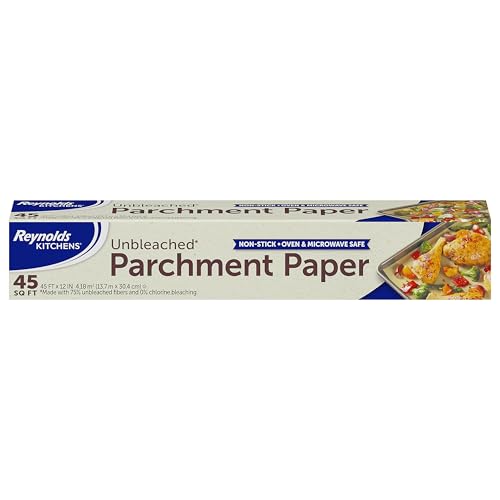
- Parchment paper, unbleached – this helps you push through the stall without steaming the meat like foil can. You keep the bark and the moisture.
- Instant-read meat thermometer – guessing is how brisket gets overcooked. This lets you check quickly and pull it at the right moment.
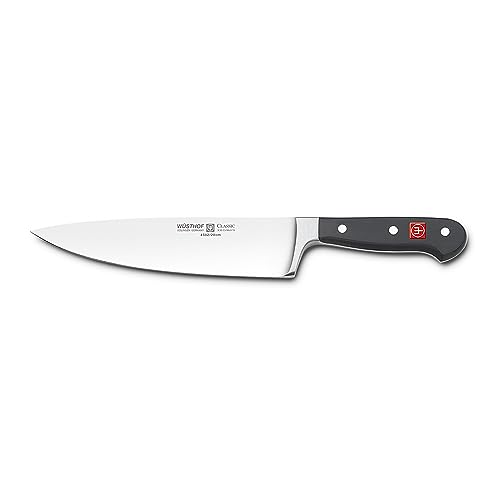
- Sharp chef’s knife – brisket needs clean slices across the grain. A dull knife will tear it apart and ruin the texture you worked for.

Smoking beef brisket is really an easy process. It takes a bit of time to cook, but boy, it’s definitely worth the wait.
This recipe is keto, paleo, gluten-free, and dairy-free.


Smoked Beef Brisket
Ingredients
- 8 pound beef brisket
- 1 tablespoon Kosher Salt
- 1 tablespoon cracked black pepper
- 1 tablespoon garlic, granulated
Instructions
- Trim the brisket. Place the meat point side down on a cutting board. Remove silver skin and any excess pocket of fat.8 pound beef brisket
- Flip it over and remove excess fat from the point side. Trim the fat cap to about ¼ inch thick.
- Generously salt the meat on both sides. Place on rimmed baking sheet.
- Refrigerate 12-24 hours, uncovered.
- When you are ready to smoke. Remove the meat from the fridge. Mix the rub ingredients together well. Sprinkle on generously and rub into meat.1 tablespoon Kosher Salt, 1 tablespoon cracked black pepper, 1 tablespoon garlic, granulated
- Set up your pellet smoker, charcoal smoker or electric smoker. Heat to 225°F. We like to use fruit wood like, apple or cherry but you can use hickory, oak, or mesquite too.
- Once smoker has come to temp, place the meat on a rack in the smoker. Either side up is fine. We generally place the fat cap up.
- Place the probe thermometer in the meat, if your smoker has one. Smoke until internal temperature reaches 165°F.
- Roll out a large piece of aluminum foil, butcher paper or parchment paper on a large work surface. Wrap the roast like a package.
- Return the brisket to the smoker, seam side down.
- Continue cooking until internal temperature reaches 200 to 205°F.
- Very important! Let meat rest a minimum of 30 minutes up to 2 hours.
- Separate the flat from the point (the grain of the meat is opposite in the two muscles). Slice both parts against the grain with a sharp knife into ¼ to ½ inch slices.

 See all of my favorite tools and gift ideas on my New Amazon Store!Check out Binky's Amazon Store!