
Maple Candy | How to Make Maple Candy


Maple candy is incredibly delicious. It only has two ingredients and can be made in less than an hour, start to finish.

Want to make your friends and family a better snack? Get your kids eating this delicious candy instead of processed chocolate and other junk food. It’s a perfect, natural way to satisfy your sweet tooth.
🍽️ Recipe Name: Maple Candy
⏰ Ready In: 25 minutes
⏳ Cooling Time: 10 minutes
🔥 Cook Time: 10 minutes
👥 Serves: 12 servings
🥕Main Ingredients: Pure maple syrup, butter
🍳 Special Equipment: Saucepan
⭐ Why You’ll Love It: Maple candy is a healthy sweet treat the whole family will enjoy.
👇 Full measurements and instructions are in the recipe card below.
What is maple candy
Maple candy is a sweet confection that is popular in the Northeast United States and in Canada. You can find it at every maple syrup store or festival around.
It can be made several ways. You can use just maple syrup heated to about 30°F over the boiling point where you live. This type is referred to as maple sugar candy.
It can be made with butter as we are doing today, which will help with foaming. This candy is less hard, so it’s great for folks with braces and the like.
You can also make it with butter and milk or cream. Which will make a creamy candy. That is, again, more chewy.

If you’ve ever visited a maple festival in the Northeast or stopped at a roadside sugar shack, you’ve probably seen maple leaf candies stacked behind the counter.
What Maple Syrup Should You Use?
You can really use any grade of pure maple syrup for this recipe. Don’t use imitation maple syrup. That will not work.
Grade B will make a slightly darker candy, but Grade A will work as well.
What You Need
- Pure maple syrup – don’t use imitation processed maple syrup. It will not work. You can make this candy with just maple syrup. The only thing butter does is help with foaming.
- Butter – use unsalted or salted butter; you can also substitute a bit of vegetable oil or cream of the milk.

Optional Ingredients
Many times you can find them with optional ingredients like salt (think of salted caramel) and walnuts. If you would like to add them, feel free.
How to Make Maple Candy
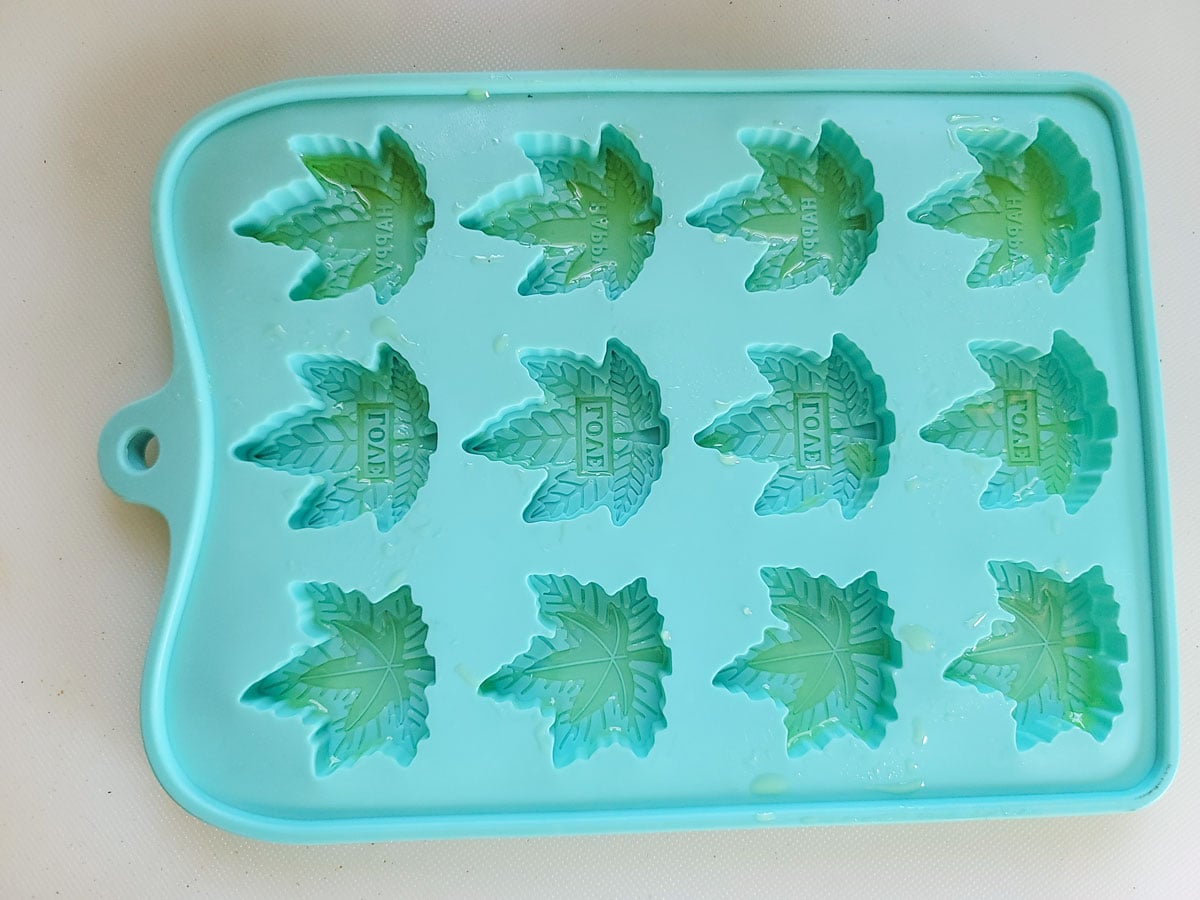
If using candy molds, lightly spray with nonstick spray or add a few drops of oil, then coat them with your finger. If using a jelly roll or bread pan, line it with parchment paper or spray.
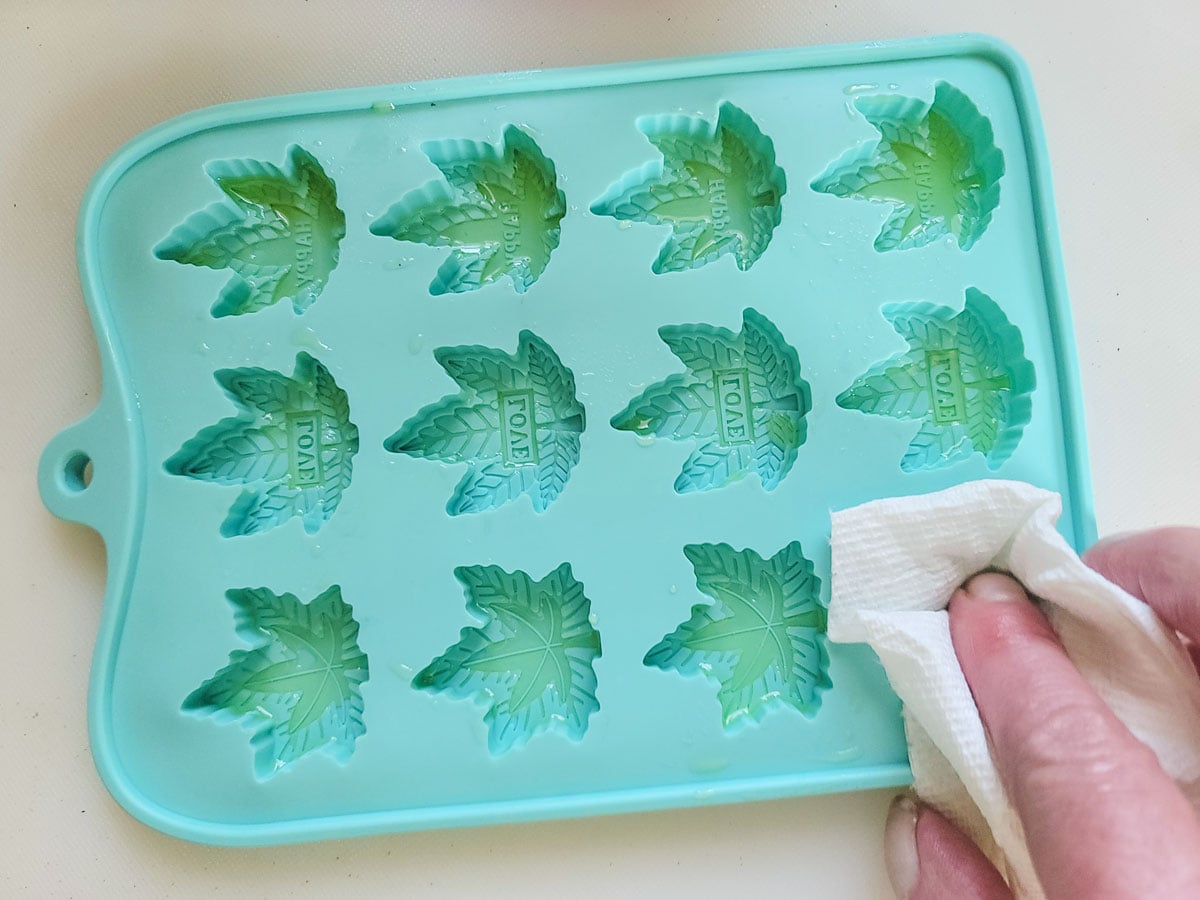
Wipe off the excess with a paper towel.
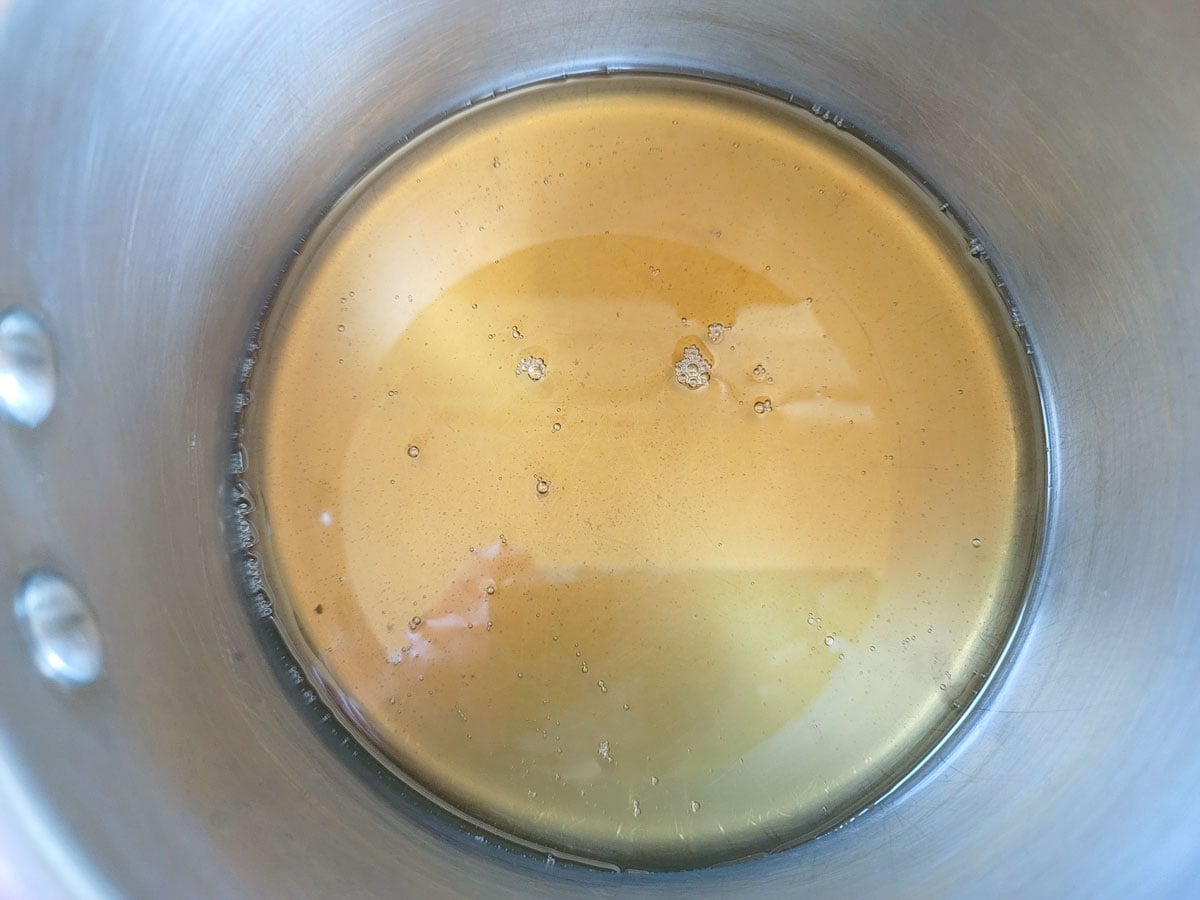
Pour syrup into a large saucepan or pot. The syrup will bubble up and foam, so make sure you have a large enough pan.
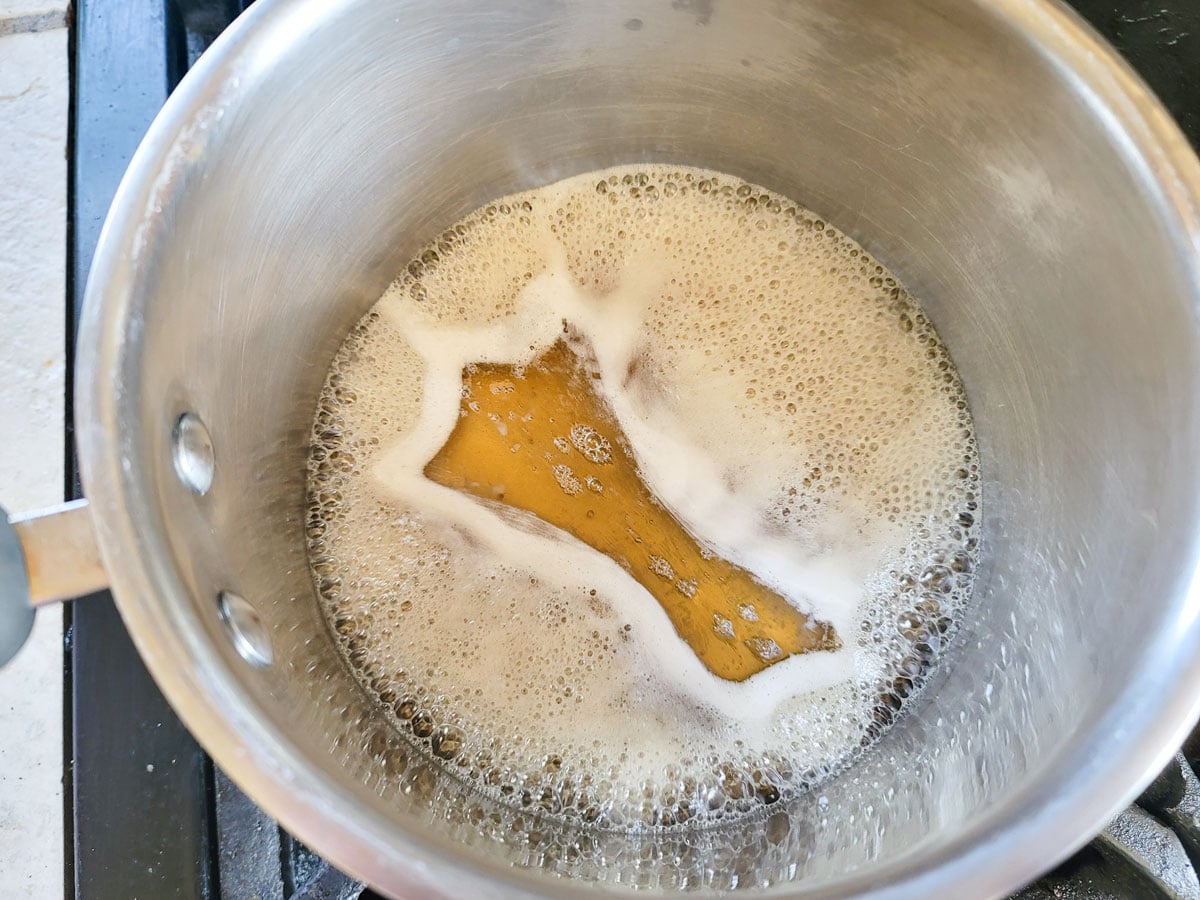
From this point, the maple syrup will bubble up quickly.
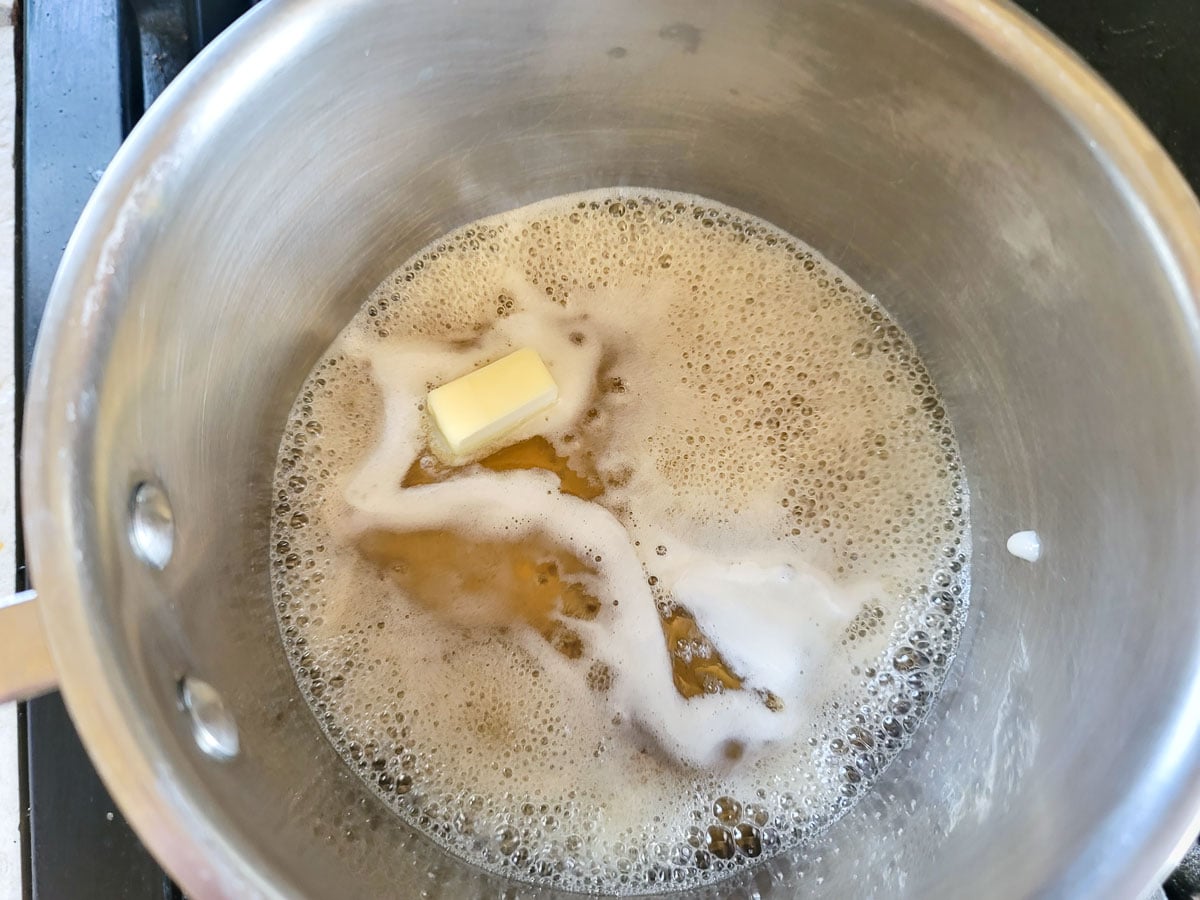
Once it boils, add the butter and stir until melted.
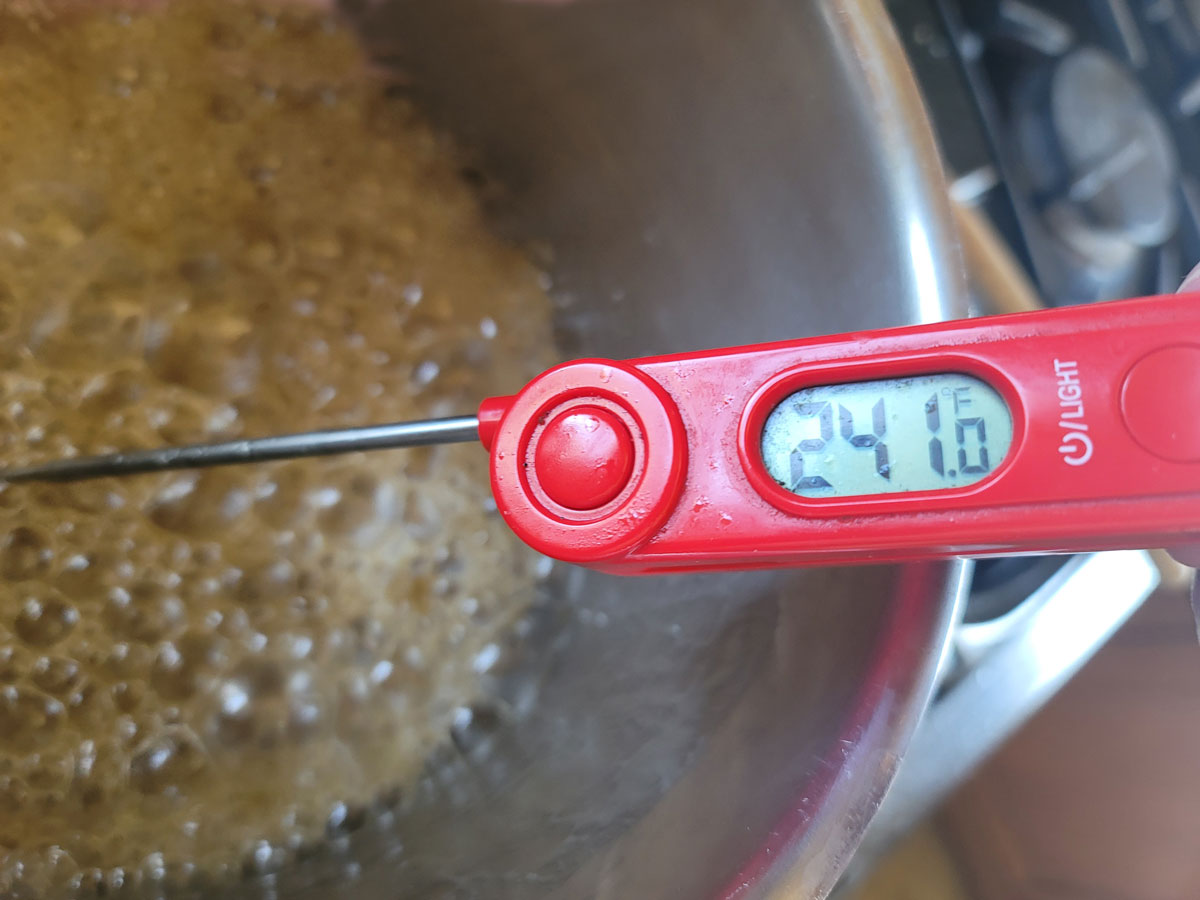
Test the temperature with a candy thermometer. The temperature of the boiling syrup should be about 240°F (soft-ball stage), 32-34 degrees F above the point at which water boils at your elevation. See below for a link to determine your elevation by zip code.
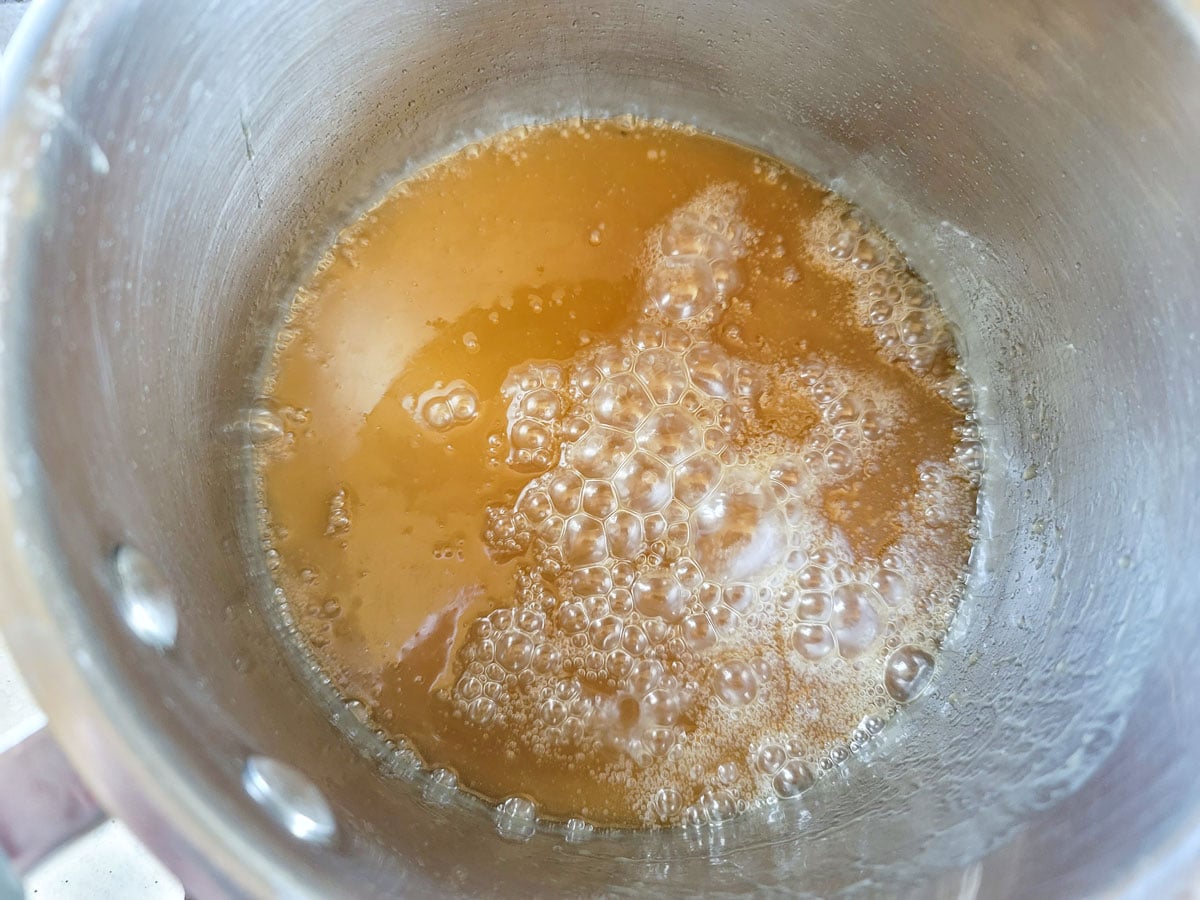
Remove it from the heat and allow it to cool for a couple of minutes. Then stir it vigorously with a wooden spoon until it loses its gloss, thickens, lightens in color, and turns opaque.
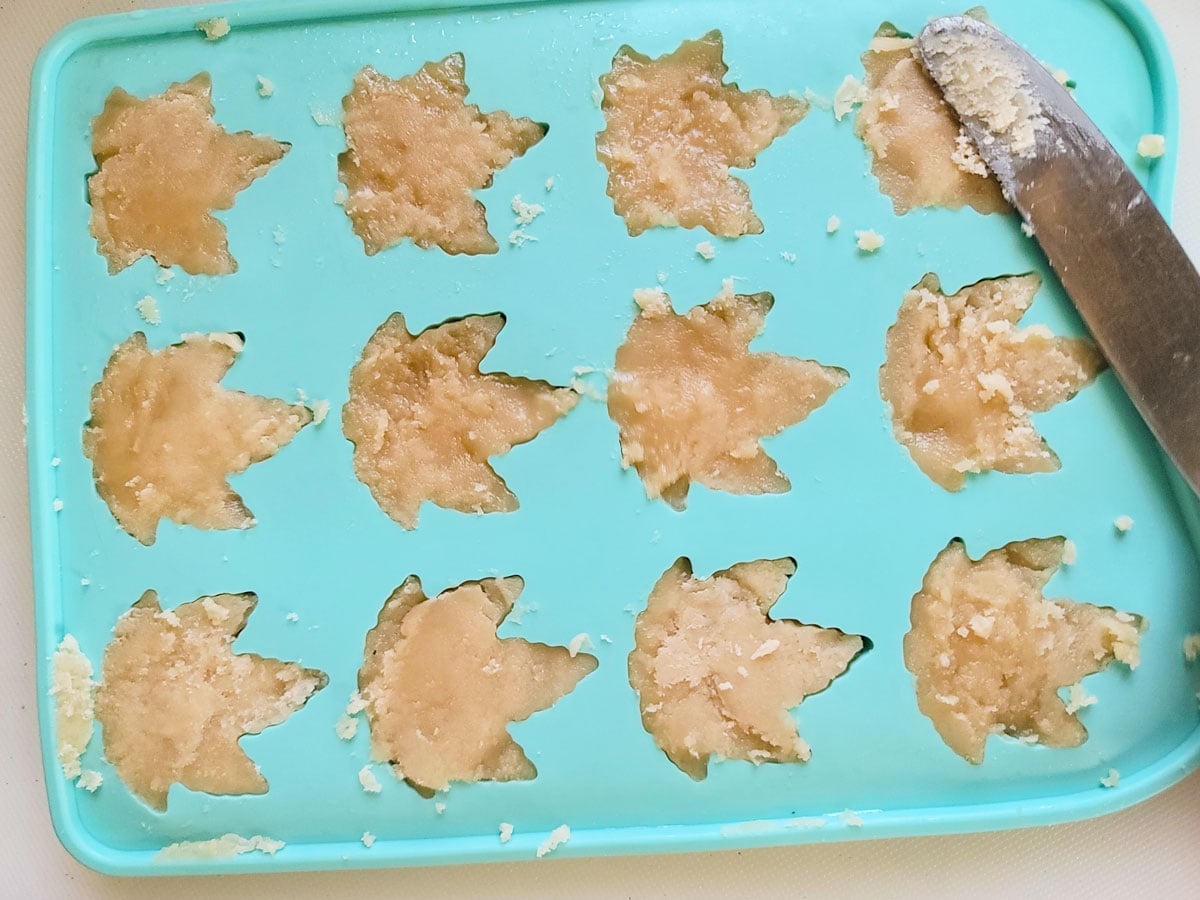
Stop stirring. If it cools too much, it will be difficult to pour or spoon into molds, and it may harden in the pan. Work quickly. Pour the mixture into molds, smooth them off with a flat spatula or the flat side of a knife. As the candy cools, it will begin to harden, and you may have to spoon it into the mold. If it hardens, make sure to push it down with the knife so that it fills in the mold.
Let the candy cool for about 10 minutes. Pop them out of the molds. Place them on a rack to completely cool for a couple of hours.
Pro Tips for Your Success
- The tricky part is learning how much to stir and when to stop stirring. If you stir the mixture too much, it will harden in the pan. If you don’t stir enough, it may not harden at all. If it hardens, add about ½ cup of water and slowly reheat. Start the process over again.
- Did you know that water boils at different temperatures at different elevations? According to the USDA, “As atmospheric pressure decreases, water boils at lower temperatures. At sea level, water boils at 212 °F. With each 500-feet increase in elevation, the boiling point of water is lowered by just under 1 °F. At 7,500 feet, for example, water boils at about 198 °F. Because water boils at a lower temperature at higher elevations, foods that are prepared by boiling or simmering will cook at a lower temperature, and it will take longer to cook.“
- Once you quit stirring, work quickly to get the candy into the molds. It may help to have two people working on it. One to pour or spoon the mixture into molds and one to smooth out the bottoms of the candy.
- Use rubber, wood, or silicone molds.
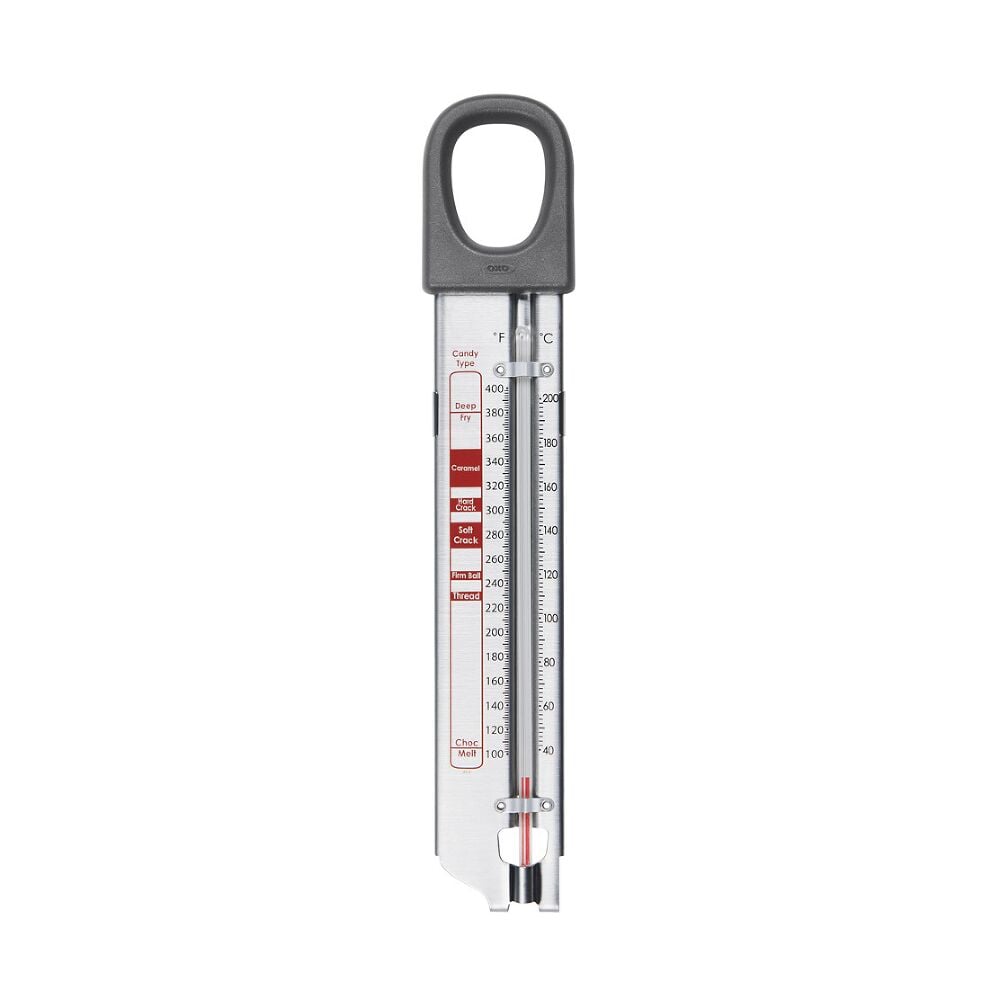
This tool takes the guesswork out of cooking hot sugar. The clip keeps it in place while the syrup cooks and thickens.

These molds help turn cooked maple syrup into individual candies without extra cutting. The separate cavities keep pieces evenly sized and easy to handle.
Can You Make it Without Candy Molds?
Yes. If you do not have candy molds, pour the maple mixture into a parchment-lined loaf pan, bread pan, or small baking dish. Once the candy cools, cut it into squares with a sharp knife.
You can also spoon small portions onto parchment paper for a more rustic candy shape. Work quickly because maple candy begins to harden fast once stirred.
How to Store it
Store maple candy in an airtight container at room temperature for several days. For longer storage, keep it refrigerated between layers of parchment paper to prevent sticking.
Because maple candy can absorb moisture, keeping it tightly sealed helps maintain the best texture.
Can You Freeze It?
Yes. Maple candy freezes very well. Place the candies in an airtight freezer container with parchment paper between layers so they do not stick together.
Let the candy thaw at room temperature before serving. Properly stored, frozen maple candy keeps its flavor and texture for several months.
Why Pure Maple Syrup Matters
Pure maple syrup is essential for making maple candy because it contains the natural sugars needed for the candy to set correctly. Imitation pancake syrup contains corn syrup, flavorings, and added ingredients that prevent the candy from behaving properly during cooking.
The flavor is also completely different. Pure maple syrup gives the candy its rich, deep maple taste that makes this treat so popular at maple festivals and sugar shacks across the Northeast.
Troubleshooting Tips
Candy hardened in the pan: Maple candy hardens quickly once it loses heat, especially if it is stirred too long. If the mixture becomes too thick to pour, add about ½ cup of water to the pan and slowly reheat it over low heat until smooth again. Then repeat the cooking process.
Working quickly after stirring helps prevent the candy from setting before it reaches the molds.
Candy won’t set: If maple candy stays soft or sticky, the syrup likely did not reach the soft-ball stage. Humid weather can also make it harder for candy to firm up properly.
You can return the mixture to the saucepan and cook it again until it reaches the proper temperature. Using a candy thermometer makes this much easier and more reliable.
Candy turned crumbly: Crumbly maple candy usually means the syrup was cooked slightly too long or reached too high a temperature. Overcooking removes too much moisture, creating a dry texture instead of a smooth candy.
Try lowering the heat slightly and watching the thermometer closely next time.
Candy stuck to molds: Maple candy can stick if the molds are not lightly greased before filling. A tiny amount of oil or nonstick spray helps the candy release cleanly once cooled.
Silicone molds usually work best because the flexible sides make it easier to pop the candy out without breaking it.
Tools That Make This Recipe Work
If you don’t have these on hand, you’ll feel it fast in the final result.
- Candy Thermometer – Missing the correct temperature by even a few degrees can leave the candy grainy or too soft. A reliable thermometer removes the guesswork.
- Saucepans – A heavy saucepan helps the syrup heat evenly without scorching. Thin pans create hot spots that can burn the maple syrup before it reaches the right stage.
- Maple Candy Mold – Gives the candy its shape and helps it set evenly as it cools. Without molds, the mixture hardens quickly and becomes difficult to portion neatly.
More maple recipes


Maple Candy | How to Make Maple Candy
Ingredients
- 1 cup maple syrup
- ½ tablespoon butter
Instructions
- If using candy molds lightly spray with non stick spray or add a few drops of oil and coat them with your finger. If using a jelly roll or bread pan, line it with parchment paper or spray and wipe off excess.
- Wipe off the excess with a paper towel.
- Pour syrup into a large saucepan or pot. The syrup will bubble up and foam so make sure you have a large enough pan.
- Bring it to a boil over medium heat.
- Once it boils add the butter and stir until melted.
- Test the temperature with a candy thermometer. The temperature should be about 240°F (soft-ball stage) 32-34 degrees F above the point water boils at your elevation. See below for a link to determine your elevation by zip code.
- Remove it from the heat and allow it to cool for a couple minutes.
- Then stir it vigorously with a wooden spoon until it losses it’s gloss, thickens, lightens in color and turns opaque.
- Stop stirring. If it cools too much it will be difficult to pour or spoon into molds and it may harden in the pan.
- Work quickly. Pour the mixture into molds, smooth them off with a flat spatula or the flat side of a knife. As the candy cools it will begin to hard and you may have to spoon it into the mold.


 See all of my favorite tools and gift ideas on my New Amazon Store!Check out Binky's Amazon Store!
Notes
- The tricky part is learning how much to stir and when to stop stirring. If you stir too much the mixture will harden in the pan. If you don’t stir enough, it may not harden at all. If it hardens, add about ½ cup of water and slowly reheat. Start the process over again.
- Did you know that water boils at different temperatures at different elevations? You need to check the boiling point of water at your elevation. Just enter your zip code.
- Once you quit stirring, work quickly to get the candy into the molds. It may help to have two people working on it. One to pour or spoon the mixture into molds and one to smooth out the bottoms of the candy.
- Use rubber molds, wood molds or silicone molds.
Planning on making these for Christmas! And idea how long they keep if stored in an air right container?
It will last about a month. Store it in an airtight container, in a cool place.
I really tried to follow the instructions. The syrup was getting really thick and hard to pour into molds, but it never got hard and the soft syrup is just stuck in my molds. I am thinking I needed to beat the syrup longer but feel it wouldn’t have poured at all into the molds. I love the flavor though.
I don’t believe the recipe is at fault. I believe I need to try again but do something different… like beat the syrup longer?
It’s definitely a fine line. Did you get it to temperature it should be at your altitude? That is the single best test of whether to candy will harden, or not. Did you read the Pro tips section in the article? You can add water to it and try it again.
I tried to follow all instructions. Something just wasn’t right. I will try again. Thank you.
No problem. If there is anything else we can help with, just let us know.
I am definitely saving this recipe to try making one of my all time favorite candies! But you do know those are pot leaves, not maple leaves, right? That’s why you’re getting those comments! Funny, but not maple leaves!
Actually, they are in fact, representative of Acer saccharum, or Sugar maple. They have a similar shape to Cannabis sativa (marijuana), the leaf is less profoundly lobed than pot. These are definitely sugar maple. I have a BS in Ornamental Horticulture from Cornell University. Funny observation, though!
I particularly like the pot leaf molds–I bought the regular maple leaf ones though–the family and friends are a bit more conservative…
I went for maple leaves personally.
I’m so glad that you were successful Lisa! Thanks for letting me know.