
How to Make Venison Jerky (Deer Meat Recipe)
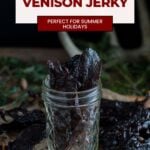
If you’ve got a stash of venison in the freezer, this deer jerky recipe is a smart way to use it. You don’t need a fancy dehydrator. Just use your oven and a simple marinade made with pantry ingredients. The flavor is rich, smoky, and slightly sweet—perfect for snacking or packing for the trail.

Venison is a lean, flavorful meat harvested from deer, antelope, elk, and other ungulates. It is full of protein and packed with essential nutrients. It’s a beloved choice for many due to its low-fat content and distinct flavor that sets it apart from your everyday beef or chicken. But when it’s transformed into jerky, that’s when the magic really happens.
Jerky has long been a tried and true method of preserving meat, originating from the ancient practices of indigenous peoples. Today, it serves as the perfect, protein-packed snack for long hikes, road trips, or just those moments when you need a quick, tasty pick-me-up.
It’s simple to make, customizable to your palate, and way better than anything you’d pick up at the convenience store. Our favorite flavor is this teriyaki.
Which cuts of meat should you use?
The best cuts of the deer are the larger muscles from the rear leg and hindquarter. Top round roasts, bottom round roasts, butts, and eye-of-round all make great jerky and are the easiest to cut.

How to slice the meat
Decide which roast you would like to use. Put the roast in the freezer for a couple of hours until semi-frozen. With a very sharp knife (a filet knife works great for this), slice the meat against the grain into very thin strips, about 1/8″ to 1/4″ thick.
If you have a meat slicer, this will make the job incredibly easy. You can slice the meat with the grain if you prefer a chewier product.
What you need
- Thinly sliced deer meat; remove silver skin and any connective tissue before slicing.
- Soy sauce: Adds a salty, umami flavor to the meat.
- Brown sugar: Adds just a touch of sweetness.
- Oil: Essential for this teriyaki-flavored marinade.
- Grated fresh ginger or ginger powder: Fresh ginger is best but dried powder will work.
- Minced garlic or garlic powder: Again, fresh is best but dried can be substituted.
- If you’d like a smoky flavor and are doing the jerky in your dehydrator or oven, add a few teaspoons of liquid smoke.
- You can add the recommended amount of Insta-cure to preserve it for longer. This is most important if using a dehydrator to dry your jerky.
How to make it
In your oven

Mix all of the ingredients together in a covered plastic or glass bowl. Add venison. Marinate for 1-2 days, shaking the batch a few times per day to mix the ingredients up again. Don’t leave the meat in the marinade for more than 48 hours.

Remove the slices from the jerky marinade and lightly pat dry. Cover a rimmed baking sheet with aluminum foil for easy cleanup. Place a rack over the baking sheet.

Arrange venison on the rack, not touching each other.
Note: You can also hang a piece of meat on a skewer or toothpick and feed the slices through the rack of your oven to hang them. Protect the bottom of your oven against drips with a layer of aluminum foil.
Place the sheet in the oven on the lowest setting. Mine is 170°F, but some have the lowest temperature of 200°F. Dry for 4-6 hours, until the jerky is still flexible when you try to break it. Increase the oven temperature to 275°F for about 10 minutes to bring it up to a safe temperature (160°F).
Store the cooled jerky in plastic bags in the refrigerator for at least two weeks or freeze it for longer storage. It can be used for camping and hiking trips, but should be consumed within a few days.
If storing in a cool, dry place for extended periods, the correct amount of salt must also be used. 2½ tablespoons of salt per five pounds of meat.
In your food dehydrator
Step One
Mix all of the ingredients together in a covered plastic or glass bowl. Add venison. Marinate for 1-2 days, shaking the batch a few times per day to mix the ingredients up again. Don’t leave the meat in the marinade for more than 48 hours. Don’t forget to use Insta-Cure, according to package directions, if you’re drying in a dehydrator.
Step Two
Let some of the liquid from the marinade drip off the slices. Pat dry with a paper towel.
Lay the sliced, marinated meat on your dehydrator trays in a single layer.
Step Three
Slide dehydrator trays into the dehydrator.
Set the temperature to 145-165°F/ 70°C. Set the timer for 4 hours. Check. See if the jerky is done to your liking. If not, dry jerky until it bends but cracks as it bends.
In your smoker
The smoker is our favorite way to make jerky. It adds a smoky flavor without the addition of liquid smoke, and you can dry it at a lower temperature than you can in most ovens.
Marinate the meat as above in step one.
Hang slices on bamboo skewers instead of individual toothpicks; they are easier to thread.
Hang the skewers on the racks of your smoker, threading the pieces through the racks so that they hang.
Set up your smoker with wood or pellets and water. Set temperature to 145°- 165°F (70°C)
We like to use mild woods like maple, oak, or fruit woods. However, you can use mesquite, hickory, or any other wood you like.
How to Know When the Jerky is Dry Enough?
Test pieces of jerky to determine doneness. Bend a piece of jerky. If it breaks, it is overdone. Remove it from the cooking immediately. If it bends and a few of the outside fibers snap, it is done. If it bends but none of the outside fibers break, it isn’t quite done enough.

Pro tips for success
- To make this recipe gluten-free, substitute tamari instead of the traditional soy sauce.
- Don’t skip the marinade time. It will give the jerky more flavor.
- Do not marinate the meat at room temperature. This will allow harmful bacteria to grow! Refrigerate the meat while marinating.
- You can use ground meat and use a jerky gun to make jerky. We prefer slicing thin. We find the texture is more pleasurable when sliced than the jerky gun produces.
- Make sure you cut the pieces thin. If you have a meat slicer, it is a great tool for getting uniform pieces.
- You can also ask your local butcher to slice the meat for you.
- Cook the jerky to your liking. Some people prefer chewy jerky that isn’t too dry. Others prefer their jerky to be thoroughly dried out.
- Use this jerky recipe with any protein you like. Most domestic and wild-sourced meats work great for jerky, like chicken, beef, and fish.
How to store jerky
1. Cooling: Once your jerky is dehydrated, let it cool down to room temperature. This can take an hour or two. Cooling is essential because it prevents condensation from forming when the jerky is stored, which could lead to spoilage.
2. Packaging: Next, place the jerky in airtight containers or vacuum-sealed bags. If you’re using a zip-top bag, squeeze out as much air as possible before sealing.
3. Storing: Store the jerky in a cool, dry place away from sunlight. The refrigerator is the best option, but if you have a root cellar that maintains a consistent temperature, that could work, too. The key is to avoid heat and humidity, which can lead to spoilage. It will only store at room temperature for a few days.
4. Long-Term Storage: If you want to store your jerky for longer periods (months to a year), consider vacuum-sealing it and keeping it in the freezer. While this isn’t necessary for short-term storage, it can help preserve the jerky’s quality over longer periods.
5. Checking for Freshness: Always check your jerky before eating it, even if it’s been stored properly. If it has an off smell, looks discolored, or has a sticky or slimy texture, it’s best to discard it.
Remember, homemade venison jerky doesn’t have the same preservatives as store-bought jerky, so its shelf life will be shorter. Generally, you can expect properly stored homemade jerky to last a few days at room temperature, a few weeks in the refrigerator, or up to a year in the freezer. Always use your best judgment. When in doubt, throw it out.
How to Make a Dry Marinade for Jerky
This dry rub version skips the liquid marinade, making prep faster and less messy. Keep in mind: like all jerky, it’s not shelf-stable unless curing salt is used and proper drying temperatures are maintained. Store it in the fridge for up to two weeks, or freeze for longer storage.
Mix 2 tsp kosher salt, 1 tsp black pepper, 1 tsp garlic powder, 1 tsp onion powder, 1 tsp smoked paprika (or regular paprika), ½ tsp cayenne pepper (optional, for heat), and 1 Tbsp brown sugar together well. Sprinkle over the sliced venison. Mix everything well with your hands. Refrigerate the meat for 6-12 hours, up to 24 hours. Then dehydrate as above.
Some jerky is cured with curing salt, which is basically sodium nitrate. Some common names are Instacure #1, Prague powder, or pink curing salt. You will run into differing opinions on its use in jerky.
Foodborne illnesses thrive in conditions that are found in most dehydrators. Our dehydrator has a manual temperature setting, so we dry jerky at a higher temperature. If you have a dehydrator with only one heat setting, typically under 140°F, using the cure is a good idea.
Always add the cure according to package directions.
This jerky is shelf-stable for about two weeks in a cool, dry space. It should be stored in the refrigerator for up to two weeks or frozen for longer storage. If you want to take it on your next hunt, it will last a few days without refrigeration.
For the best outcome, vacuum pack your jerky in single-serve portions and refrigerate or freeze.
Yes, you absolutely can dehydrate for too long, and then your jerky will have no chew. It will just be brittle. Dry your jerky until the edges are fairly crispy, but the interior will still tear easily.
You can, if you can adjust your air fryer to a temperature around 165°F. It should take 3-4 hours.
Yes. Classic flavors like BBQ jerky, Spicy Chili Lime, or Smoky Garlic-Pepper are great marinades. Dry marinades always consist of salt, pepper, garlic and onion powders, smoked paprika, cayenne pepper, and brown sugar.
Some other delicious venison recipes
- Venison stew
- Venison burger
- Deer neck roast
- Venison enchiladas
- Venison Summer Sausage
- Smoked venison backstrap
That is how easy it is to make deer jerky at home! Venison jerky is a great way to preserve your harvest. Make some today!


Deer Jerky – How to make venison jerky
Ingredients
- 1.5 pounds venison roast
For Teriyaki Jerky Marinade
- ½ cup soy sauce
- ½ cup brown sugar
- ½ Tablespoons grated fresh ginger
- ½ Tablespoons garlic, minced see notes section
- ¼ teaspoon cracked black pepper
Instructions
- Trim the roast. Room any sinew or silverskin.1.5 pounds venison roast
- Slice venison roast very thin. ⅛ to ¼" thick.
- Add grated ginger to other ingredients in a plastic or glass bowl with a lid.½ cup soy sauce, ½ cup brown sugar, ½ Tablespoons grated fresh ginger, ½ Tablespoons garlic, minced, ¼ teaspoon cracked black pepper
- Mix well.
- Add sliced meat to marinade. Refrigerate 1-2 days shaking the contents of the bowl a few times daily.
- Foil a rimmed baking sheet. Place cooling rack over the baking sheet. Lay meat slices on rack. Do not let the slices touch each other.
- Place in oven at the lowest setting for 4-6 hours, depending on the heat of the oven and your dryness preference. Leave the oven door cracked. If you like jerky a bit chewy, don't dry all the way. If you like it very crispy. Dry thoroughly.
- Store in refrigerator for up to 2 weeks. For longer storage freeze.


 See all of my favorite tools and gift ideas on my New Amazon Store!Check out Binky's Amazon Store!
Notes
- To make this recipe gluten-free, substitute tamari for the traditional soy sauce.
- Don’t skip the marinade time. It will give the jerky move flavor.
- Use garlic powder instead of fresh garlic if you’d like.
- You can literally use this same recipe with a commercial dehydrator. Depending on the heat and quality of your dehydrator, it should be between 4 and 8 hours.
- Make sure you cut pieces thin. If you have a meat slicer, that is a great tool to use to get uniform pieces.
- You can also ask your local butcher to slice the meat for you.
- Cook the jerky to your liking. Some people like jerky that is chewy and not as dried. Others prefer their jerky to be fully dried out.
Nutrition
Originally published December 8, 2020. Updated August 12, 2025.
- Recipe Name: Venison Jerky (Teriyaki & Dry Rub Versions)
- Type: Snack, Preserved Meat
- Main Ingredients: Venison, soy sauce, brown sugar, garlic, ginger, onion powder, smoked paprika, kosher salt
- Prep Time: 30 minutes
- Marinate Time: 12–48 hours
- Cook Time: 4–6 hours
- Total Time: Up to 2 days, depending on method
- Yield: Varies based on meat weight
- Special Equipment: Oven, dehydrator, or smoker; wire rack or skewers
- Great For: Hunters, meal prepping, hiking snacks, wild game preservation


