
Essential Canning Tools
Canning doesn’t require a ton of equipment, but using the right tools makes the process safer, faster, and a lot less frustrating. These are the canning tools I actually use, broken down by method, so you can skip the clutter and focus on what matters.
The Essentials
Water Bath Canning Pot – For small jars, you could use a large Dutch oven with a kitchen towel on the bottom so the jars don’t crack.
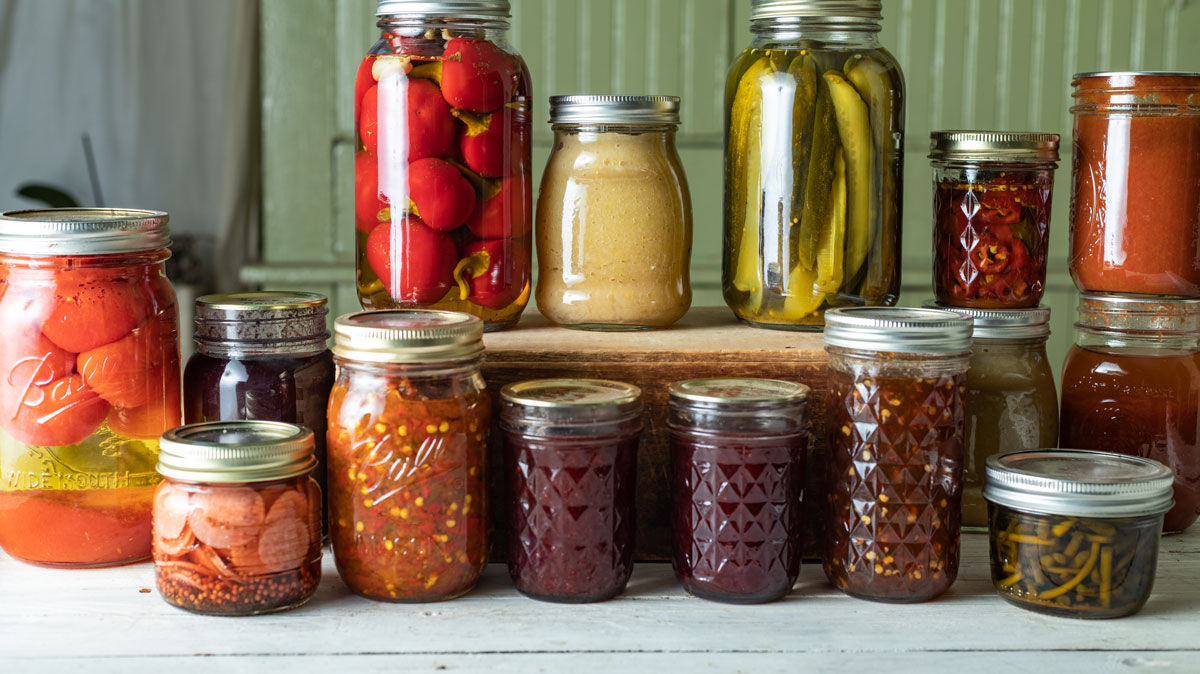
Half Pint Mason Jars– For small batch jams and jellies
Pint Mason Jars– For Pickling, jams and jellies
Ladle– For filling jars with hot foods.
Canning Tool Set– These sets contain a canning funnel, jar lifter, magnetic lid lifter, jar lifter, headspace measuring tool, and bubble tool.
Timer– You’ll need this to time the cooking time.
Pot Holders– These are imperative. Canning pots get super hot.
Pressure Canning
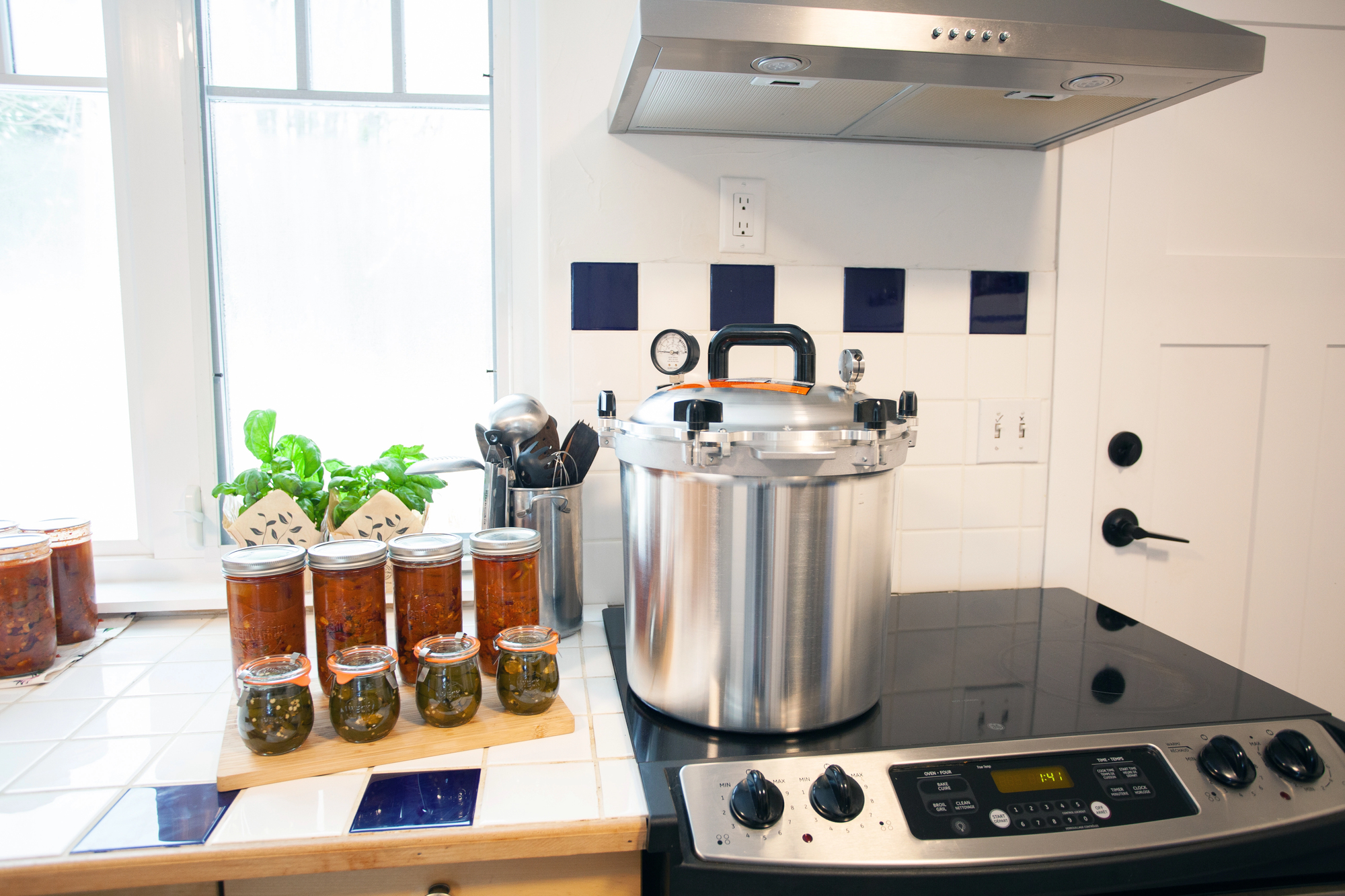
Pressure Canner– These are used for low-acid foods. They are able to heat the food inside the jars hotter than a water bath canner.
You also need the jars, lids, bands, ladle and tool set above.
Steam Canning
You also need the jars, lids, bands, ladle and tool set above.
Optional
Food Mill– This tool is an easy wasy to separate seeds from grapes, berries and more.
Immersion Blender– Blends preserves smooth.
Jelly Bag Strainer– This tool drains impurities and pulp from juices for making jelly.
Thermometer– A thermometer is handy to know if your jams and jellies are hot enough to gel.
pH Meter– This is used to test the acidity of the foods you can and determine which method of canning is the best for your product.